 |
 |
 |
 |
 |
 |
 |
 |
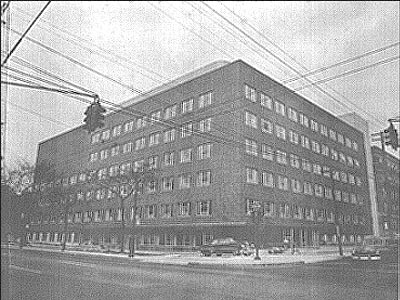
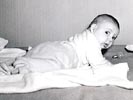
John Lombardi and Mary Quinlan were married in June of 1948 at St. David's Catholic Church in Detroit. I was born in 1953 at Woman's Hospital downtown and I’m their only child. We lived at Euclid and 12th street. In 1958 we moved to an apartment on Shaffer for a year while we waited for a new home to be built in Nankin Township, just a few miles west of the city. |
 |
| Weekends were spent traveling back and forth visiting grandparents. Our vacations were usually spent in Canada visiting relatives. I never cared for being in Canada. It's a beautiful country and I don't have anything against Canadians but Detroit (The Redwings) | |
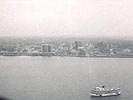
| was my City and Canada (The Montreal Canadians) was on the other side of the river! Hockey Rivals - No other reason. During summer vacation I got to stay with my grandparents in Lincoln Park. My Uncle lived on the next block. He had a boat and would take us on rides up and down the Detroit River. My aunt Jeri also lived in the neighborhood. She was a teacher at the local school and during the summer was in charge of recreational activities. I always had something to do. |
 |
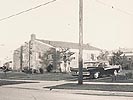 |
We moved from our small apartment in Detroit to a house with three bedrooms and a basement on the corner of Hubbard and Anita drive in Garden City. It was a brand new neighborhood with a lot of kids. All of the houses were new and many were still under construction. Later, in the '60's, our Garden City address changed to the City of Westland. | 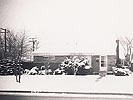 |
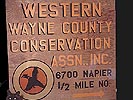 |
Johnny was a Navy man and a proud reservist. When he was in service he taught marksmanship. There were always guns in the house. They were kept in my parents' room where I wasn’t allowed. One day my mom caught me snooping around in their closet looking at the guns. She had a fit and the following weekend my dad took me to the Wayne County Conservation Association gun range. I was so excited. I loved westerns and Roy Rogers was my hero. I was just 6 years old. I remember it was a Friday afternoon and we were the only ones on the 100 yard rifle range. |
| Except for Saturday Morning television I had never heard a gun fire before. My dad set me up at the shooting table on two milk crates, loaded up a Winchester 32 special (like a 30 30), put a cloth between my shoulder and the gun and told me how to aim at the target. Pulling the trigger was the biggest surprise I ever had. It was violent. It knocked me back, hurt my shoulder, and it was loud! | |
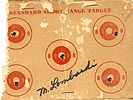
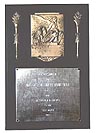
| I instantly understood why we don't play with guns in the house! My shoulder turned black and blue and I reveled in showing off my bruises to everyone. After that, we went to the range almost every weekend. Marge came most of the time. She was a good shot. The target shown on the page is hers from 15 yards with a .32 caliber handgun, all bull’s eyes. Johnny had a work bench set up under the stairs leading to the basement where we melted lead and loaded our own bullets. It's a hobby that I still enjoy when I get the chance. |
 |
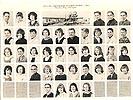
| My first school was Nankin Mills Elementary. It was located at the end of Hubbard and Ann Arbor Trail. It was just over a quarter mile from the house so I walked to school every day and I loved school - until the third grade. |
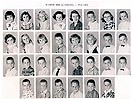 Nankin Mills 1958/59 |
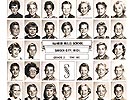 Nankin Mills 1961/62 |
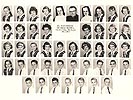 St. Bernardine 1962/63 |
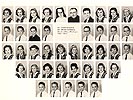 St. Bernardine 1963/64 |
| As an only child I was used to getting my way all of the time. All it took was a tantrum. I didn't really play well with others nor did I take direction well. I didn't like my teacher telling me what to do, wouldn't do my homework, and didn't pay attention. I was always grounded. Grounded for me wasn't simple like having to stay in my room, it was doing something that I absolutely did not want to do. The whole summer after 2nd grade, every day, I had to pick dandelions from the lawn and put them in paper bags. It was my punishment for taking my friend Ronnie’s baseball cards without asking. It was a good lesson and an ongoing threat. After that, I never took anything that didn't belong to me. |
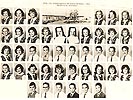 St. Bernardine 1964/65 |
 St. Bernardine 1965/66 |
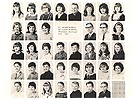 St. Bernardine 1966/67 |
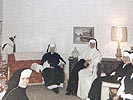 |
In 3rd grade I got bused to Mckee Elementary School, where I got into even more trouble. My Mother’s family were strict Irish Catholics. They were Carpenters, Firemen, Police Officers, Customs Agents, Teachers, Priests, and Nuns, Lots of Nuns. I grew up surrounded by Nuns mostly Dominicans. Everyone thought that Catholic school might be the answer to my contrary behavior. I went to St. Bernardine Catholic school for the next four and a half years surrounded by even more Nuns - Franciscans. | 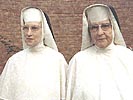 |
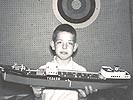 |
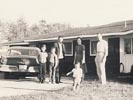
Bradley Hitter had been my best friend since Kindergarten. Every day on my walk home from School I would stop and visit. His mom would always have some cool snack ready. In 5th grade, Bradley's family moved from the neighborhood to the country out in Northville, west of Plymouth. Brad and I would have sleepovers on the weekends and in the summer we would spend 2 weeks at each other’s houses. His house was so cool! He lived across the road from Bowman's farm and went to school in a one room school house. All of the grades were in the same room at the same time. |
| He lived on a dirt road called Brookline and had a large piece of property to play on. Everyone had animals, cows, chickens, and horses. Brad had horses too. Just like every kid, I always wanted a horse. Brad's pet horse was a mean Shetland pony named Apple that only Brad could ride. I tried over and over but that horse hated me. Brad used to tease me about being a city slicker because I could not ride that horse. I was thrown off, kicked, bit, and bruised year after year. Eventually I lost my wish to own a horse. We had BB guns, we hunted stuff, we were cool, and no one lost an eye. |
 |
| I enjoyed hanging around with relatives many which were in the clergy. I even entertained a vocation as a priest and attended a summer retreat at Divine Word Seminary in Perrysburg, Ohio. It was actually a fun place. There were a lot of activities with a lot of religious instruction mixed in. Attending was supposed to help me figure out if I really wanted to be in that life. I checked it out and one evening I got my answer. Some of the full time seminarians had a rock band. I heard them play one night in the auditorium and my mind was made up. I wanted to be a musician. | 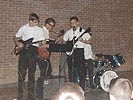 |
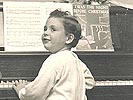 |
I've been playing music longer than I can remember. We always had a piano in the house. Mom would play every day and I would try to follow. I went to a lot of Italian weddings and was in love with the accordion. I started taking Accordion lessons and somewhere around 7 or 8 years old. I played in front of a live audience for the first time with my accordion class. I knew then that all I wanted to do was to play music. I played at family events, birthday parties, church socials, my front porch, and anywhere that someone would listen. My favorite bands were the Ray Conniff Orchestra, Skitch Henderson, Les Brown, |
| and I never missed the Lawrence Welk Show. In February of 1964 I was watching the Ed Sullivan show when I saw the Beatles for the first time. If you weren't around in 64, it's hard to explain just how much the Beatles influenced the music world and particularly my world. I was a Beatle maniac! I wanted to grow my hair and play guitar but my parents, Marge in particular, would not let me have a guitar. I bought Beatle sheet music and played it on the accordion but it just wasn't right! I didn't want to play the accordion any more. | 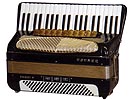 |
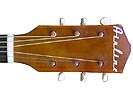 |
In 1966 my parents finally caved in and bought me my first guitar, a $17.00 Montgomery Ward Airline folk guitar but, with Marge there was always a catch like in a hostage negotiation. In order to get the guitar I had to agree to take piano lessons. I agreed. My teacher was a man named John Machno. He came to my house once a week for lessons. He thought I had potential but always seemed angry with me because I only practiced about thirty minutes a day (or less). He had a profound influence on my musical work ethic but it was many years before I realized his point - if you don't practice, nothing happens! I wish I could spend time with him today. The rest of my free time was spent trying to learn guitar. |
| Even Catholic School couldn't keep me out of trouble. They turned me down when I wanted to be an altar boy. I could sing so they put me in the church choir but then kicked me out for bad conduct. We had an hour for lunch every day. I lived a mile away but I used to leave school and pretend to go home for lunch. Instead, I would skip over to the Lyndon Drug store soda fountain, put nickels in the jukebox, and listen to the Beatles. I got caught when a neighbor reported to my mom that she saw me in the drug store reading magazines. There was hell to pay. |  |
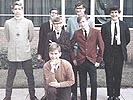 |
I really dreaded Catholic school and everyone knew it so by mutual agreement, over the Christmas holidays of 1966, I left Saint Bernardine and went to Nankin Mills Jr. High. I loved it. I was back with the guys I knew from grade school. In January 1967 I ran into my old friend Jim Kerr. Jim and I had been in trouble together back in the 3rd grade. He was cool and I liked him and he had a silver tongue and could talk me into anything. He walked up to me in the hall and said "Hey, you want a job as a disc jockey?" and I said “sure”, just like that! |
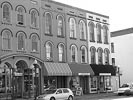
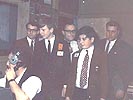
| Jim Kerr was an absolutely brilliant kid. He thought he was invincible and I thought he was too. It was Jim that made the connection with Brian Hadley, station Manager at WYNZ radio in Ypsilanti. Jim had taken a bus there, toured the station and convinced Brian to give him an interview. His second question after asking me if I wanted to be a DJ was whether I could get us a a ride to Ypsilanti. I brought it up to my parents that night about it. Marge didn't believe a word of it and did not want me involved but when she found out that we were planning to hitchhike if we couldn't get a ride she volunteered to drive us. We worked on our pitch to Brian for a few days and at 1pm on Saturday February 4th 1967, dressed in a suits and ties; we met in Brian's office. | 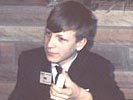 |
 |
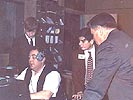
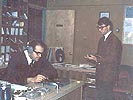
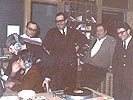
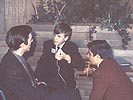
Brian Hadley expected a lot from us. We had to learn every part of how a radio station worked from teletype to turntables, transmitters to towers. We had to study for and pass the FCC exams for a broadcast license and we learned how to sell sponsor time for our show. We learned about live remote broadcasting and took a trip to the tower. It was all part of the education, and we had mentors. | 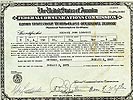 |
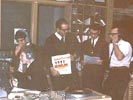
| Brian was the sales and advertising guru, Keith Fry (The Keeter Show) and Ed Gibson (Big Pappy Show) taught us how to run the board, Bob Hall was a producer and country music DJ. Brian put together a real sales book with graphics and numbers and wehit the street to sell air time. We wore suits, Jim carried a brown briefcase. |
 |
 |
 |
 |
|
 |
Our first sponsor was Harvey Goldstine, owner of The Pumpkin, a teenage nightclub with live bands and a faux bar. They served non-alcoholic liquor and beer. Local bands like Bob Seger, The Wanted, The Titlewaves, The Woolies, etc., played on weekends. We taped an interview with Harvey and played it on the air. We had call in contests and gave away free passes to the clubs. Jim and I would get on stage introduce our selves, talk about the radio show and introduce the bands. We were doing well right out of the gate! |
| I was only 13 at the time and my parents were behind me 100% but there were rules, threats and lessons. Grades came first. After that it was whatever Marge said came first and she had a lot to say! If I didn't follow her orders she would threaten to cancel my show or take away my guitar, or anything to be in control. She had worked at W.J.R. Radio in Detroit playing piano live on the air as background for commercials and had a long history in managing live shows starting with U.S.O. shows in the late ‘40's and ‘50's. She traveled the US promoting and producing musical plays for charities. She had a lot of experience and an overwhelming need to apply it to what Jim and I were doing. | 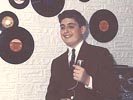 |
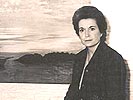 |
Almost Immediately, Marge appointed herself manager, editor, and director of everything we did. Jim and I wanted to be a DJ team, Marge wanted scripted produced shows. Jim wasn’t having any part of that. By the time the show was three weeks old it was very clear that Marge and Jim were never going to get along. Once they had a screaming match in the next office while I was on the air. It was awful. All I could think was Brian being in the middle. He finally settled things by splitting us up with our own shows. Jim settled in to be a great DJ which was exactly what he wanted in the first place and I stayed focused on the teen news and music program. Eventually Jim went on to work at several stations including WKNR. The last I heard he was working as a radio personality in New York City. I saw a picture of him shaking hands with President Bush! |
| To prepare for my show I had to go through a lot of newspapers. More than just playing records, it was a scripted show. I reported on any teen activities that were going on at the time. I got the local papers from around the community and found articles to use on the air. Marge would phrase and type my scripts. We argued a lot, mostly about her outdated ideas of production and promotion starting with dress. For 5 years I wore a white shirt and a tie to school and hated it. Now, I had to wear shirt, tie, and a jacket anytime I went out. I had to wear a name tag. The only time I got to wear what I wanted was in school and the school still had a dress code. I wasn't happy about it but the results were amazing. | 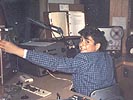 |
| Adults treated me like an adult. After all, I was asking them for money to sponsor advertising and they seemed more receptive to do business when I was dressed like them. | |
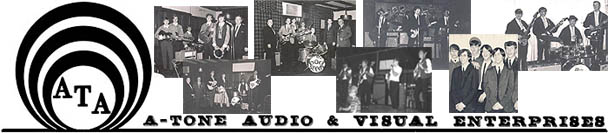
| Marge thought I should have my own company name and logo to further myself by booking talent. We came up with the name A-Tone-Audio and Visual Enterprises Inc. She along with graphic artist Betty Poynter created a logo and printed letter head. |
 |
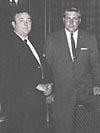 |
In March '67, Keith Frye became an A.T.A. partner. He and Bob Hall had a talent agency called Bob-Key. They were already booking and managing working Detroit bands like The Pendulums, The What Knots, The Bad Seeds, and The Ravens. We rented the space behind Chucks Barber Shop on Ann Arbor Trail and built a recording booth and rehearsal studio. Johnny was interested in recording so he built studio A and purchased the board, tape recorders, mic's etc. Johnny also paid the rent. It was $185.a month. The first band to join A.T.A. was the SixPak, a local high school rock band. Next came the Solo Society, Nobody's Children, Chrome Circus, The Unveiled, Coming Generation, Purple Rush, Changing Ways, Soul Rebellion, Latest Date of Time, Love Syndrome, Lonely Souls, Midnight Riders, Holy Innocence, Euphonic Aggregation and Peaceful Existence The place was filling up fast. On a regular schedule I was soliciting all of the high schools, Jr. High's, VFW halls and the Parks and Recreation departments offering our bands for their events. |
| Keith and Bob had a reasonable expectation for the business to make money. They wanted to charge dues to ATA bands, fees for the rehearsal or recording time in the studio, plus a booking and management fee of 10% of every gig. This was a totally reasonable expectation but, after spending time with and getting to know the kids, Marge recognized that a lot of teens had serious problems—and wanted a place for them to go where they could be involved without owing dues. She decided that was what A.T.A. should be about and that ended the partnership with Keith and Bob. That was the real beginning of A.T.A. |
| By June of 1967 I was totally immersed in the grass roots of the Detroit music scene. I loved being on stage in the evenings introducing the bands. I got a chance to meet everybody, listen to all the local bands, and hang with the club owners. I invited local bands just coming out with a record to be interviewed on my show and talk about their songs. One of my interviews was with Michael John and the Pendulums. They were promoting a new record called You're Wrong Girl. In the interview they mentioned that they played a lot of ALSAC charity events around the city. ALSAC is the Danny Thomas charity for Saint Jude Children's Research Hospital in Memphis. They hold dozens of fund raising events through the year including dinners, shows, the once a year walkathon, teen events, dances, and battle of the bands. | 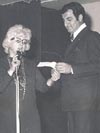 |
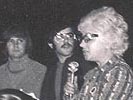 |
ALSAC was a big deal. It was a national charity. I had a great interest in getting involved with the teen dances so Michael John-( Mike Kuzma) introduced A.T.A. to the events coordinator Ethel Beckley. Ethel managed everything from production to scheduling and booking entertainment for events. Everyone volunteered their time. Ethel was having a difficult time booking bands for so many events. That's how A.T.A. got involved. They had venues and we had bands. |
| We played a lot of high schools for 75 dollars to 125 dollars a night. A.T.A. got 10% of each gig and that helped take some of the pressure off Johnny for the rent. At one time ATA had 14 bands under management and we played many events for Dollars for Scholars, LYI, LINK, and ALSAC. Playing out every weekend made for some excellent bands and everyone could keep their equipment and practice at the studio which made a lot of parents happy. At the ALSAC events we played only for gas money and A.T.A. did not collect a percentage for these shows. The media exposure was worth it. | 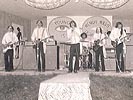 |
| There were a lot of Detroit bands playing ALSAC events that were already well established around the city. Wilson Mower Pursuit, The Camel Drivers, Third Power, Scott Richard Case, Jeff and the Atlantics, Pepper and the Shakers, The Sunday Funnies, Joe Townes, Red White & Blues, and that's just a few. Playing with them help us to get established. On the outside, the bands were very competitive for the appreciation of the audience but on the inside the musicians were a very friendly community. We shared equipment a lot for the "one stage with three bands" shows. Musicians were always moving around from band to band trying to find their sweet spot. Everyone knew everyone else if not by name, by sight, what instrument they played, and what band they were in. |
| They all donated their time to ALSAC. Now, along with high school dances, we were playing places like Edgewater, Walled Lake Amusement, JL Hudson's Teen Takeover Day, Bob-Lo Island, Ice Palace, Sheraton Cadillac, Pontchartrain Hotel, and Dance and Show clubs like the Fifth Dimension, The Hullabaloos, and The Club, and even traveled to Toledo, but everyone had their eye on Cobo Hall, now called Joe Louis Arena. This was the Big Show. |
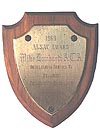
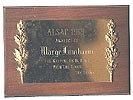
| You had to earn your way to Cobo Hall by way of playing ALSAC events. The first year, 1967, ATA had 3 bands scheduled to play. Solo Society, The SixPak, and The Detroit Vibrations. A few days before the concert a couple of guys in Solo Society broke a curfew rule that Marge had imposed on them. As punishment she removed Solo from the Cobo schedule. I tried to intervene and I got the same punishment. She took 2 bands to play and assisted the producer with scheduling the show. Danny Thomas called Marge up on stage and gave her a plaque of appreciation for ATA. The plaque had my name on it, I wasn't there. Cobo arena had twelve thousand regular seats plus floor seating and it was still S.R. O. With a full capacity audience, The SixPak opened the ALSAC show with Purple Haze and I heard the place went crazy! | 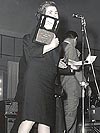 |
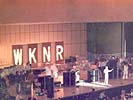 |
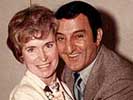
In 1968 and 69, A.T.A. bands raised over 5 thousand dollars for ALSAC. We were invited again to play the big show at Cobo Hall hosted by Danny Thomas. Marge and I booked the bands and she produced the stage shows to crowds of over 13,000 people and again she was introduced on stage by Danny Thomas. We all got awards Marge got a big kiss from Danny. At least I was there this time. We shared the Stage and dressing rooms with Bob Seger, Mitch Ryder, Andy Kim, Neil Diamond, Lou Christy, Parliament Funkadelic, Mixed Generation, Friijid Pink, Sunday Funnies, Brownsville Station, and a lot of others that had also donated their time and music. W.K.N.R. was the major sponsor of that event. Jerry Goodwin, Paul Cannon and Gary Granger were the host DJs |
| Meanwhile, my station, WYNZ, was in the process of being sold to WORD Broadcasting, a faith oriented broadcast network. My show changed from Saturday afternoons to weekends from midnight to 6 am. I had two intern students, Mike Mijal from Stevenson High and Chuck Murphy from Franklin High, that got co-op credits for working with me learning the aspects of broadcasting. They were seniors and I was 14. We had to send reports to the schools for them to receive credits. Marge always signed. Mike was learning to be an equipment and sound engineer and Chuck was formatting and reporting the news. Chuck went on to law school and Mike opened his own recording studio called Triple M in Garden City. | 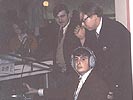 |
| The ALSAC shows got bigger, better, and more frequent. In the summer of 69, A.T.A. had a lot of bands under management and most of them were playing ALSAC events. We weren't making any money but we were getting great exposure all over the city of Detroit which led to club bookings. |
| There were too many events scheduled for A.T.A .to staff so we began contacting other agents and managers interested in the ALSAC exposure. We had our own network booking some of the most popular bands around Detroit including Al Nalli, Punch Andrews, Clyde Stevers, Mike Parshall, Jerry Patlow, Kay Koontz, Dick Krause, and we had a lot of help from WKNR. CKLW. Art Cervi, Robin Seymour, Gary Granger, Jerry Goodwin, Paul Cannon, Jim Bruzzese, Jim Berry, Ron Lashardi, Tom Smith, Bernie Adelson, and many more that deserve credit for ALSAC successes. |
 |
 |
 |
 |
|
| Marge was involved with coordinating shows and events but her main interest was helping teens with problems. Along with having bands came runaways, juvenile delinquents, and drugs. There were a couple of organizations already set up to help these kids. I remember one we visited called The Seed. It was a safe place set up like a halfway house. We gave them our support but Marge felt that it was too structured in its group approach of helping individuals. She started taking in kids and my house became the A.T.A. house. It was known on the street that if you didn't have anywhere else to go you could go to Marge's and she wouldn't turn you away. There were only 3 rules. No lying, no stealing, no drugs. | 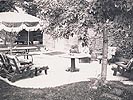 |
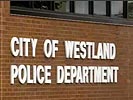 |
The Westland Police Department, notably Lieutenant Gail Stanbury and Sargent Andy Spisek, played a hands on role in Marge’s success helping kids to make better choices. Many of those kids had run away from home. They left for a myriad of reasons but there were legal issues with taking juveniles into your home. In order to stay at the A.T.A. house, Marge needed parental permission. Without permission, as delinquents, the Juvenile Division would take custody. |
| Lieutenant Stanbury had real empathy for kids that were lost. He and Sgt. Spisek stopped by often and would casually answer all kinds of questions from the kids. Sgt. Spisek was a force. His answers were straight from the shoulder He seemed to be a “This is real, no foolin” kind of guy. Their interaction with “Marge’s Kids” had positive and long lasting effects. The police weren’t very popular in the late 60’s but Lieutenant Stanbury and Sargent Spisek changed minds. |  |
 |
It was normal to see a Westland police car, or even two parked in front of the house just about any time. Whether bringing home a teen or just stopping for a coffee visit, they were always welcome. We featured Lieutenant Stanbury and Sgt. Spisek on W.Y.N.Z. radio called “Youth and the Law”. They also donated their time to speak about youth issues at our church and other venues. You can listen to those shows from links on the main menu. Click “Radio Shows 1967” then “Mike Lombardi, Sound ’67” then Youth and the Law”. |
| At any given time there were at least a half dozen kids staying at the house. During the summer there were a lot more. She was always out in the middle of the night, usually at the Westland police station, picking up kids for one reason or another. She would sit up all night counseling and drinking coffee. It was like a huge, mostly temporary, family. Some kids stayed a couple of weeks, some stayed much longer. After the bands finished a gig, She would gather up everyone and we would go to Daily's for a burger or down to the Chess Mate Coffee House and listening to Steve Booker play drums ‘till four in the morning.. | 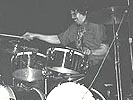 |
| For me it was like a commune. I shared everything I owned, even my clothes. I stayed in a tent in the back yard the summer of 69 because there were just too many kids in the house. Everyone thought I might be resentful but honestly I loved it. There was always something going on and Marge finally had others to focus on instead of just me! I was learning to play guitar from some of the best musicians in town, I was still at the radio station, and still on stage. |
| Eventually Word Broadcasting did not want us playing Rock and Roll on their station even for transmitter checks so that ended the radio days. I concentrated on ATA, the bands, and my music. I was getting guitar pointers from my personal hero's Jerry Bradley, Rob Nelson, Arlen Viecelli, Guy Walsh, and Tom Wood until I eventually was good enough to play rhythm guitar with a real band. My first band was with neighborhood kids Dennis Poynter, Philip Slater, and Rick Khron, but now I was in Nobody's Children and we weren't kidding around. | 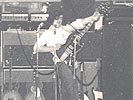 |
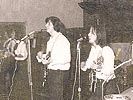 |
We played on Bob-Lo Island and won the battle of the bands and twice played at the Michigan State Fair, winning once. We played live on the ALSAC float in a parade downtown on Grand River. The float was sponsored by WKNR. The Iron Mustang Motorcycle club, dozens of teen clubs and high schools also participated. By 1970 I was burning out and was losing interest in the business end of ATA but I stayed interested in playing guitar. Lynn Moyer, the lead singer for Nobody's Children got drafted as did one of the lead guitars, Rob Nelson. Danny Moore left the band and then Tom Wood. We replaced people but the band floundered around until it finally ended the summer of 1970. |
| Without the radio program and lack of business enthusiasm on my part we closed the studio on Ann Arbor Trail and moved it to the basement of the house on Hubbard. Talk about a packed house. There was usual a band set up in the living room and one downstairs practicing in the studio. It was a loud house. Dishes rattled and kids kept moving in. Our neighbors were awesome. The Cross's, Millers, Hugals, Hughes, and the Ofchar's never complained and we were very careful not to offend. |
| One Sunday morning at 7am I answered a knock at the door. It was a band and all of their gear. They were a road band that had lost their booking in Detroit and had nowhere to go. They had heard from someone on Plumb Street (the Haight-Ashbury of Detroit) that they could stay at Marge's. The band was called Stonehenge. They set up and practiced in the living room for a week before their next booking and moved on. | 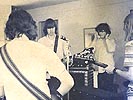 |
| I was about to turn 18 in May of 71 and itching to get out of that house, have my own room and some peace and quiet (no offence anyone!). I would be graduating in June and that was my target to plan my break to freedom. |
| Chapter two to follow |
| © 2007 Michael Lombardi |